
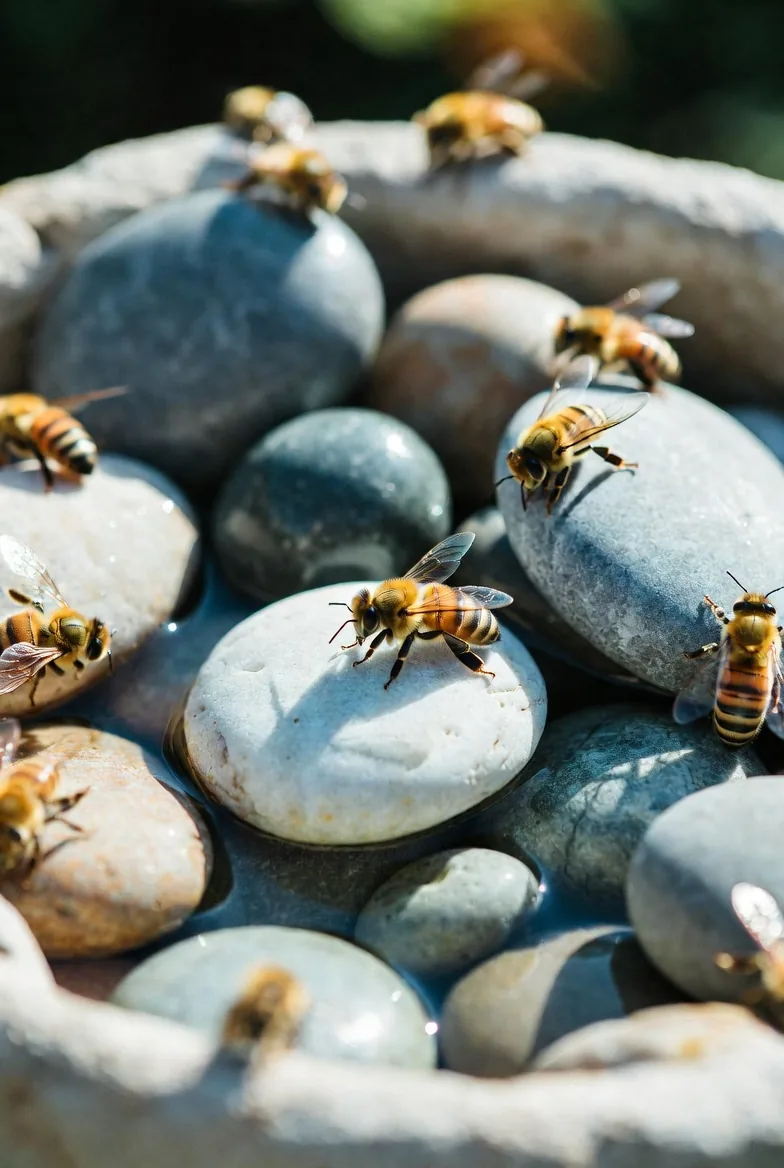
Bees landing safely on stones in a shallow water dish
Water

Make a safe drinking station for insects

Create a shallow, clean water source with secure landing places for bees and other small visitors.

Why it matters

Pollinators sometimes need water, particularly during warm, dry weather.

A drinking station should be shallow, easy to grip and simple to clean. Regular maintenance matters more than decorative complexity, and plain water is always enough.

What you need

Materials checklist.

  • A wide plant saucer or shallow dish
  • Washed pebbles, stones or glass marbles
  • Clean water
  • A level spot near flowers, ideally with some shade in high summer
Common mistakes

Skip these traps.

  • Using a deep, smooth bowl with no landing points
  • Adding sugar, honey or jam to the water
  • Letting the dish go stagnant or scummy
  • Placing it in full afternoon sun where water overheats
Step by step

Make it happen.

01

Choose a wide, shallow dish

Use a plant saucer, glazed dish or other stable container with low sides. Avoid smooth, deep vessels that offer no escape. Set it on a level surface in light shade or morning sun, close to flowers but away from pesticide use and busy foot traffic.
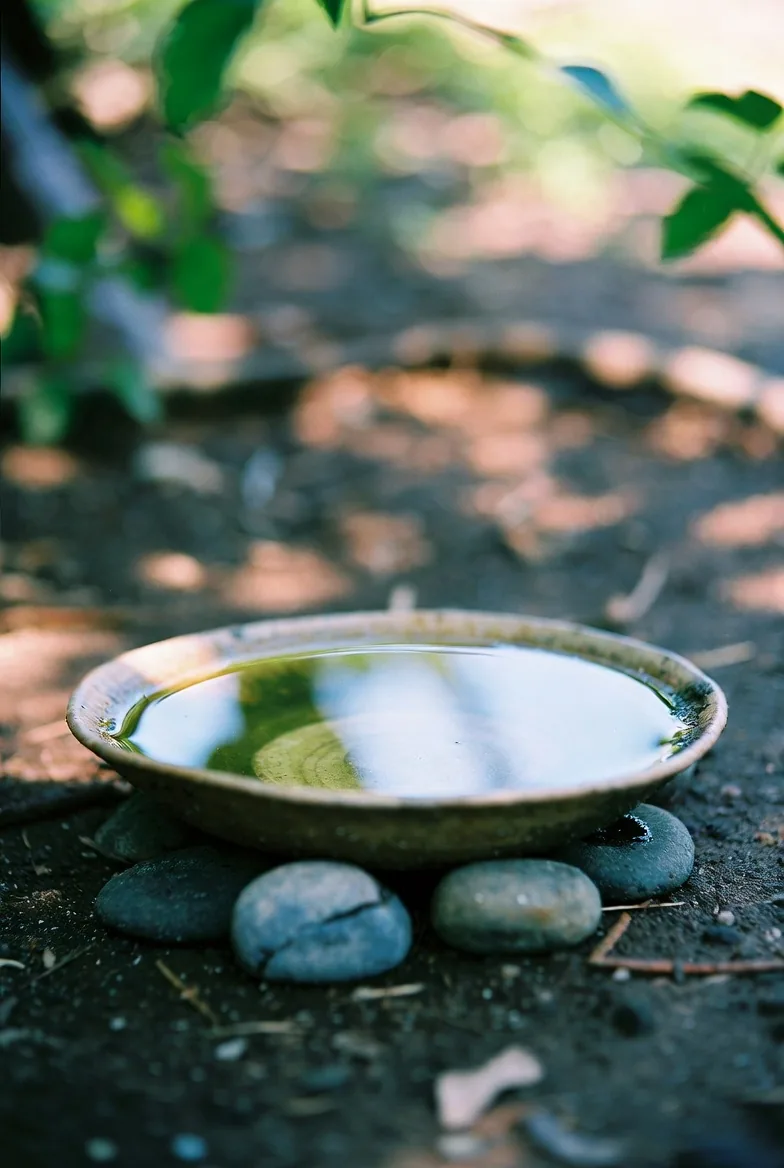
A shallow ceramic water dish raised on smooth stones in a shaded garden
02

Add safe landing points

Place washed pebbles or marbles so several surfaces remain above the waterline. The stones should be stable and close enough for small insects to step between them without entering deep water.
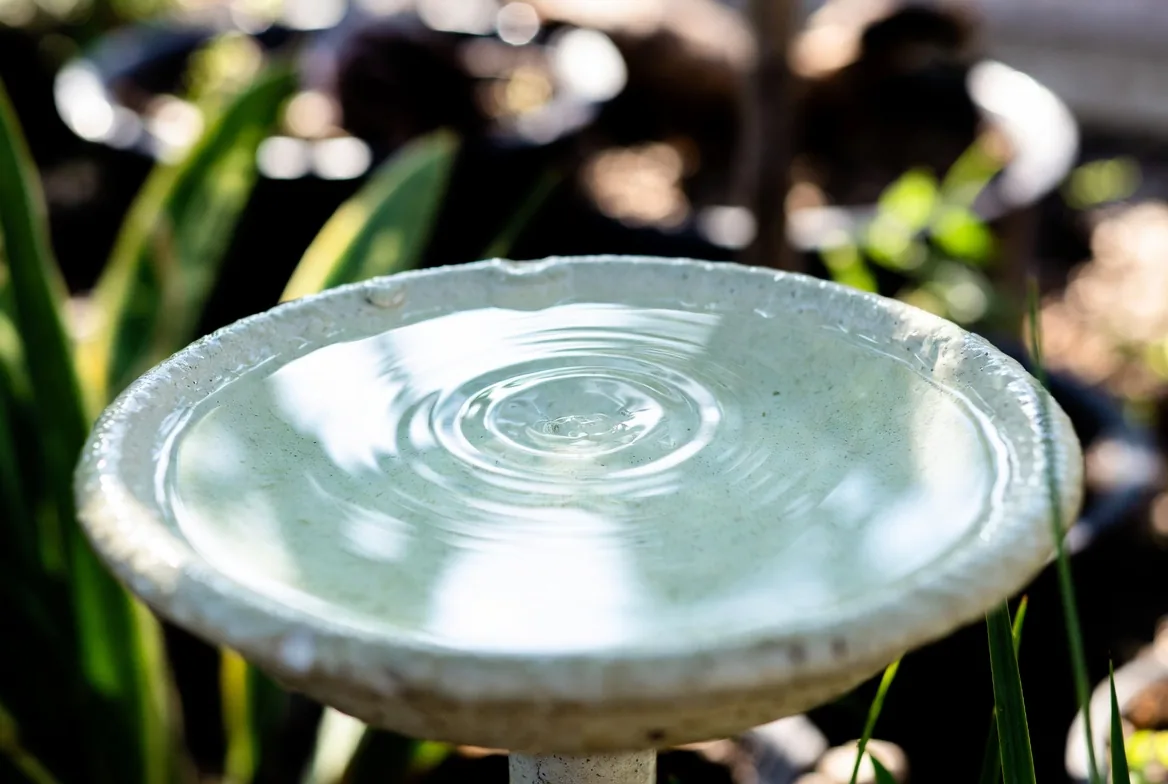
Fresh clean water rippling in a shallow garden dish
03

Fill it lightly and keep it fresh

Add clean water only to the lower part of the stones. Top it up in dry weather, empty and rinse the dish regularly, and remove algae, soil and dead insects before refilling. A clean shallow source is safer than a permanently stagnant one.
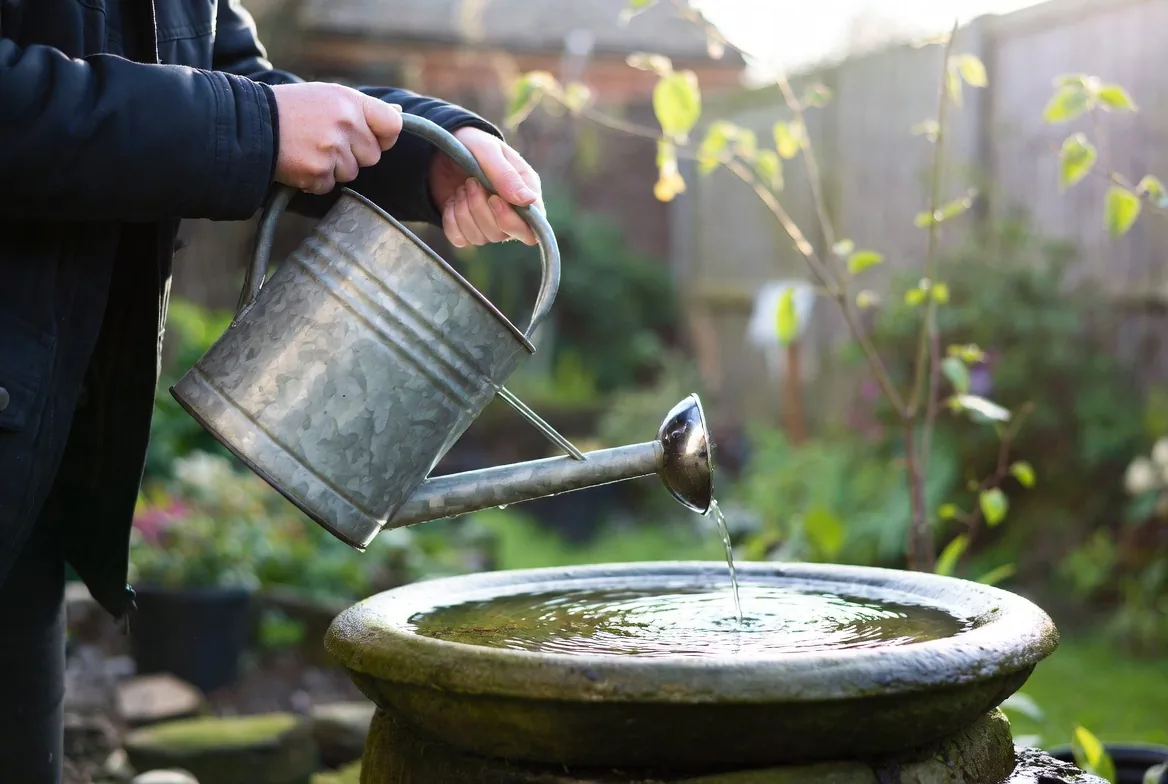
A shallow garden water feature being refilled with a watering can
04

Make it part of a wider habitat

Place nectar-rich flowers nearby and keep another water source for birds if space allows. The drinking station works best as one part of a garden that also provides food, nesting opportunities and shelter from wind and heat.
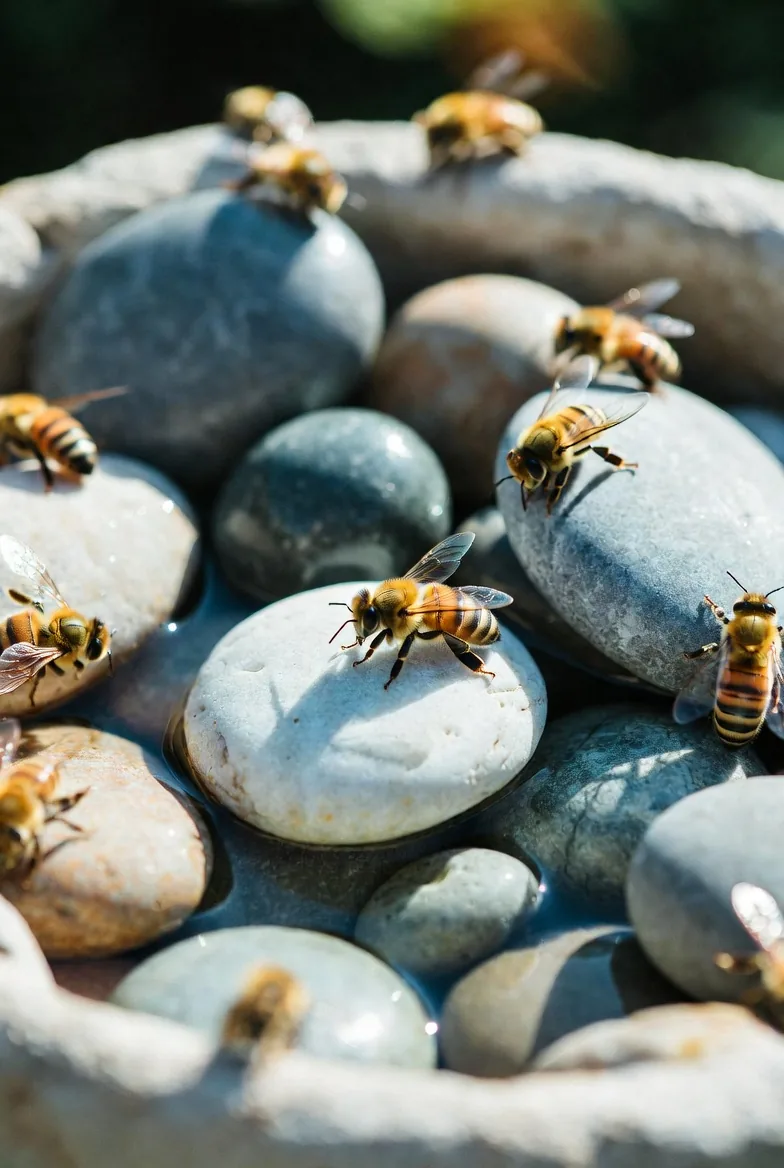
Bees using stones as landing points in a shallow water dish
Useful plants

Easy UK choices that earn their keep.

These are practical starting points, not a complete shopping list. Match plants to your light, soil and the space you actually have.

01

Lavender, thyme or marjoram nearby

Give bees a reason to stop close to the water.

02

Any open single flower

Pairs drinking water with an easy nectar source.

Common questions

Before you begin.

Will this replace a pond?

No. It is a quick drinking stop, not breeding habitat. A pond or mini pond supports more wildlife if you can add one later.

Do I need special bee water?

No. Clean plain water is best. Sugar water can harm insects and encourages the wrong kinds of feeding behaviour.

Next best step

Collect rainwater next

Keep bird baths, pots and insect dishes filled more easily with stored rain from a water butt.

Continue
Keep it wild. Keep it safe.

Let wildlife arrive in its own time.

Use responsibly sourced plants and materials, avoid moving animals from the wild, and always build in safe access and escape routes. The best habitat is one that can settle, change and become part of the wider garden.

Written and reviewed by

Natasha Card

BSc Environmental Science

Mini Wild Garden turns wildlife science and trusted UK conservation guidance into practical changes that work in ordinary gardens, balconies and small outdoor spaces.

Read the Mini Wild Garden approach
Was this guide helpful?