
Make it happen.
Choose healthy plants to keep
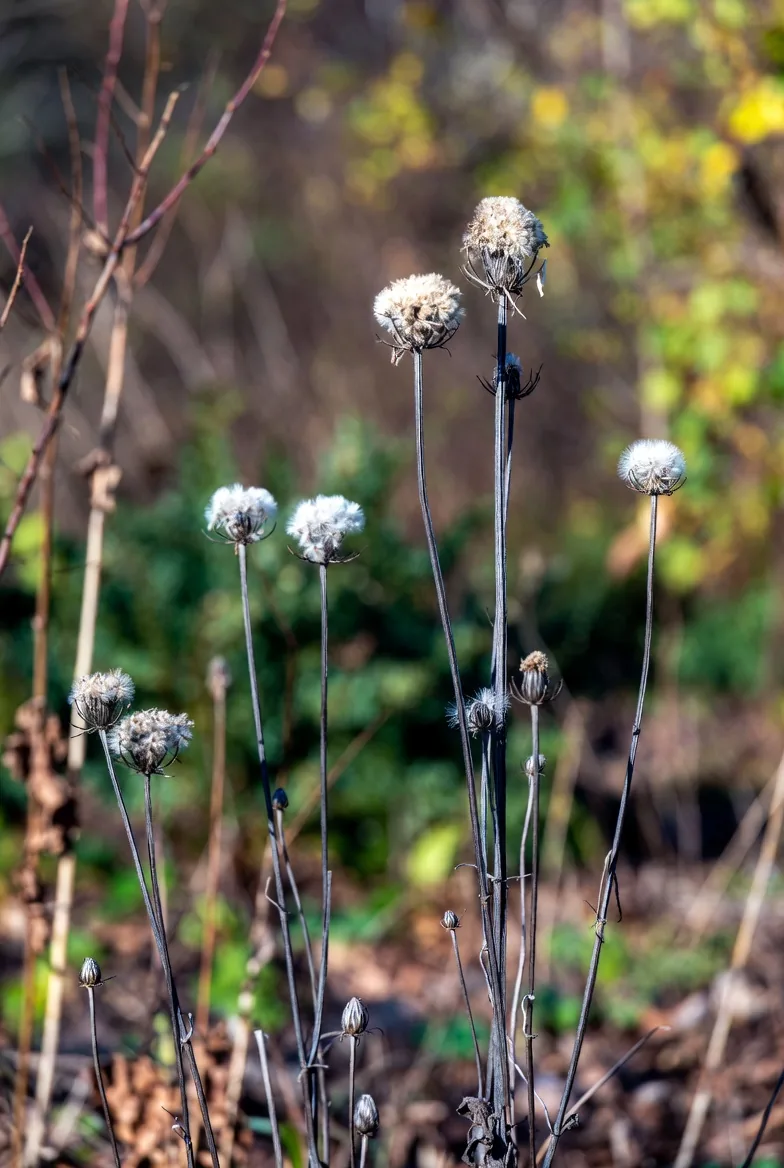
Leave strong, upright stems and seed heads that are dry, stable and free from obvious disease. Sunflowers, teasels, grasses and many herbaceous perennials can remain useful after flowering. Remove collapsed, diseased or unsafe growth rather than treating every plant in the same way.
Make the untidiness look intentional
Keep clear paths and visible edges while allowing grouped stems to stand inside the border. A simple frame of evergreen planting, a low mown edge or a neat mulch line helps the retained seed heads read as a purposeful winter habitat.
Protect the stems through winter
Avoid repeatedly moving, tying or stripping the remaining growth. Let birds take seeds and allow insects to use hollow stems and sheltered joints. Check only for stems that have fallen across paths or become unstable in severe weather.
Cut back gradually in spring
Wait until late winter or early spring, then remove growth in stages as fresh shoots appear and temperatures begin to rise. Place sound hollow stems in a dry, sheltered corner for a while instead of shredding everything immediately, and compost healthy softer material.